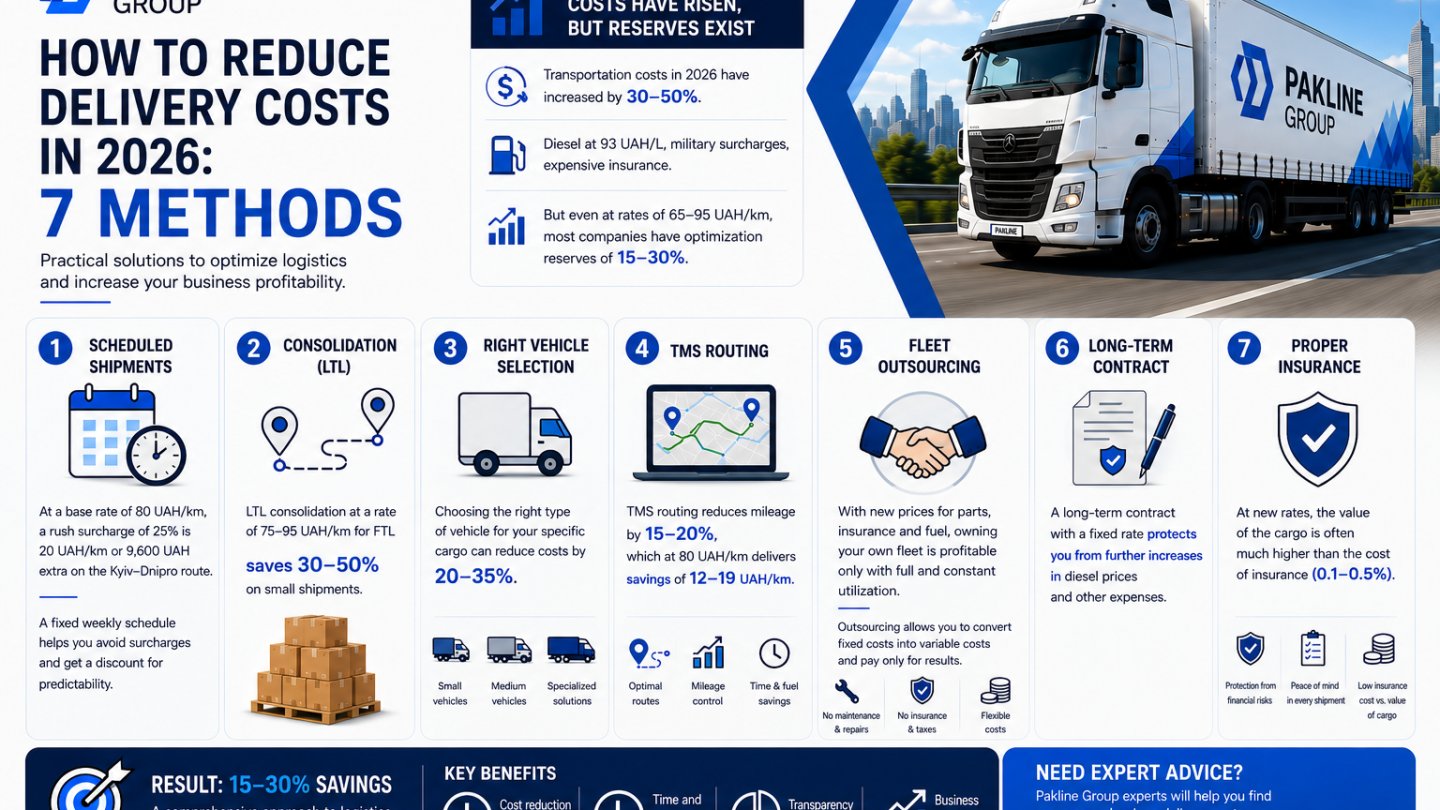
How to Reduce Freight Costs in 2026: 7 Methods
Costs Have Risen — But Optimization Is Still Possible
Transportation costs in 2026 are 30–50% higher than pre-war levels. Diesel at UAH 93/liter, war-risk surcharges, expensive insurance. Yet most companies still have 15–30% in untapped savings without sacrificing service quality.
Methods 1-2: Scheduled Shipments and Consolidation
At UAH 80/km base rate, a 25% urgency surcharge adds UAH 9,600 per Kyiv–Dnipro trip. Switching to a fixed weekly schedule eliminates these premiums. LTL consolidation at current FTL rates of UAH 75–95/km saves 30–50% for smaller batches.
Methods 3-4: Vehicle Matching and TMS
Sending a 3-ton shipment in a 20-ton truck wastes 17 tons of capacity at UAH 75–95/km. Correct vehicle type selection reduces costs by 20–35%. TMS route optimization cuts mileage by 15–20%, equivalent to UAH 12–19/km savings at current rates.
Methods 5-6: Outsourcing and Long-Term Contracts
At 2026 prices for spare parts, insurance and fuel, fleet ownership is viable only with consistently full utilization. Most businesses find 3PL outsourcing more economical than maintaining their own fleet. Long-term contracts with fixed rates provide protection against further fuel price increases.
Method 7: Correct Insurance Coverage
At current cargo values, insurance (0.1–0.5% of value) is disproportionately cheap relative to the risk. Underinsured cargo in a war-risk environment is an unacceptable exposure. Factor proper insurance into your logistics budget, not as an afterthought. Consultation available.