How to Calculate Freight Delivery Costs: 2026 Guide
Why Accurate Calculation Matters More in 2026
At rates of UAH 65–95/km, the ability to independently estimate logistics costs has become strategically important. It allows you to validate carrier quotations, build accurate budgets into product costs, and identify optimization opportunities in a high-cost environment.
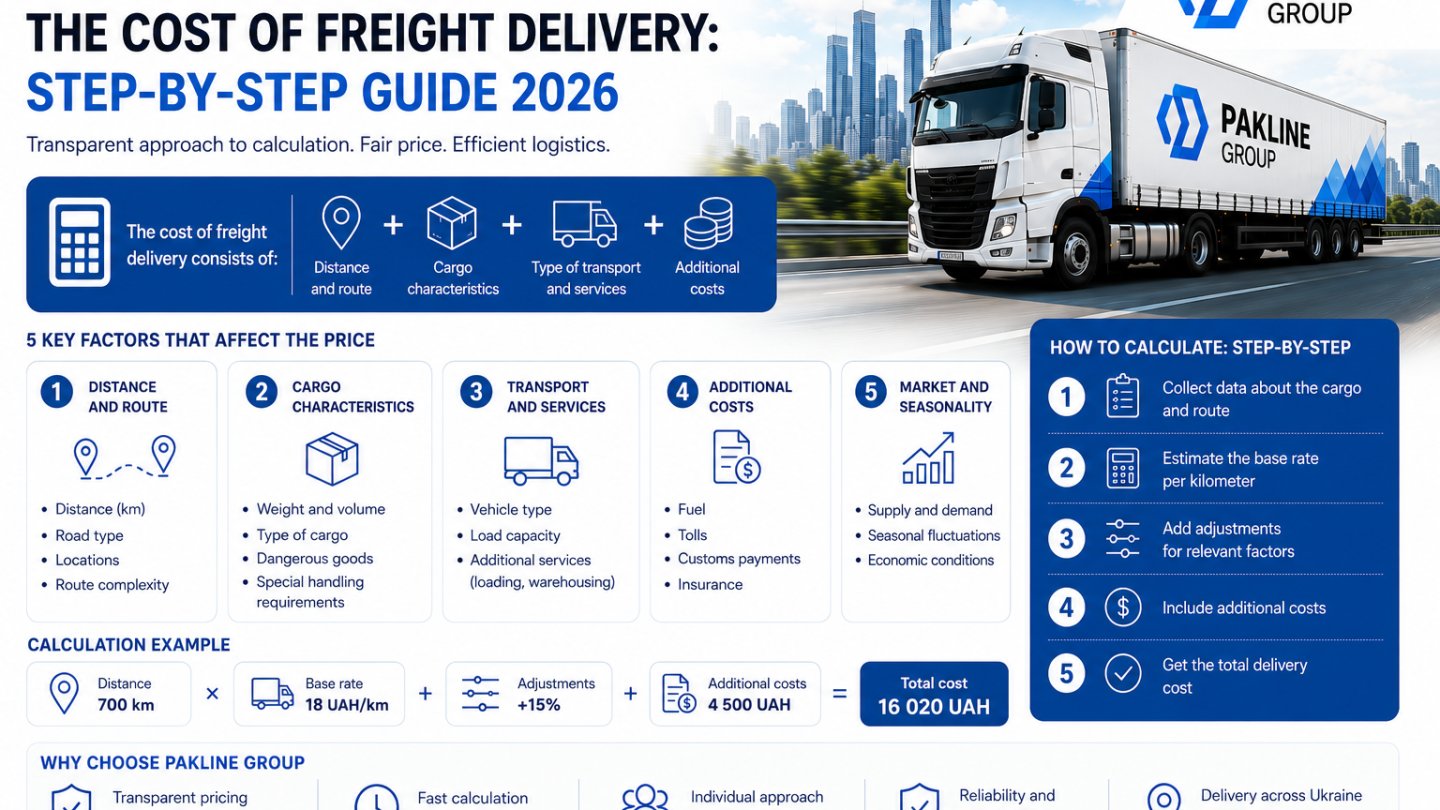
Step 1-2: Gather Data and Calculate Volumetric Weight
Collect: actual weight, dimensions of each piece, number of pieces, cargo type (temperature, ADR, fragility), route with war-risk assessment. Calculate volumetric weight: (L×W×H cm)/3000 in kg. Example: 80×60×60 cm box weighing 10 kg actual — volumetric weight 96 kg. Billing at the higher value can increase cost nearly 10-fold versus actual weight.
Step 3: FTL or LTL
FTL is justified above 50–60% vehicle fill. 2026 FTL rates: Kyiv–Dnipro from UAH 36,000. LTL is calculated per ton-km or per pallet position. For shipments under 3–5 tons, LTL is generally more economical where available.
Step 4: Account for 2026 Surcharges
Urgency: +20–40%. Refrigerated: +20–40%. ADR hazardous: +25–50%. Night/weekend: +15–25%. War-risk route: +15–30%. Extended waiting time: hourly rate. Cargo insurance: 0.1–0.5% of declared value. Fuel adjustment clause may apply.
Step 5: Compare Total Cost, Not Just the Rate
When comparing proposals, evaluate the total invoice: base rate + surcharges + VAT + insurance + loading/unloading. The cheapest headline rate frequently becomes the most expensive after all additions. Request full calculations per specific route and cargo parameters. Pakline Group: transparent pricing, 27,000+ annual trips. Consultation: pakline-group.com.ua/en/services/logistic-consulting.