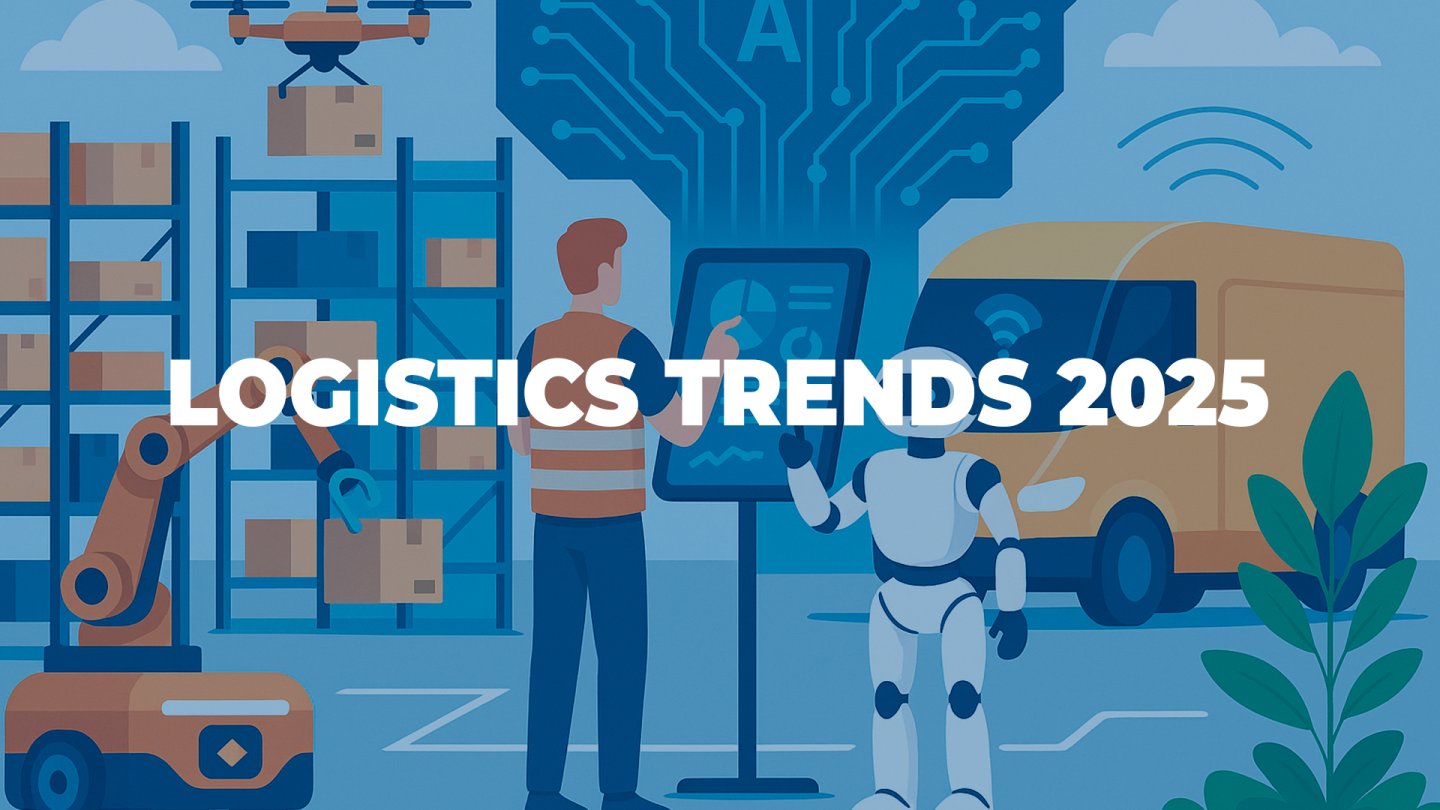
Logistics trends 2025: Pobotics, artificial intelligence, and automation
Logistics is one of the most dynamic sectors of the modern economy. In 2025, the global logistics ecosystem is undergoing profound transformation.
- Warehouse and Order Fulfillment Robotics
Robots are no longer exotic. In 2025, robotic solutions have become standard for many warehouses, especially large fulfillment centers. Popular solutions include Autonomous Mobile Robots (AMR), robotic arms for sorting and stacking, and drones for inventory checks.
Benefits of robotics:
- Significant reduction of human error;
- Faster order processing;
- Optimization of warehouse space;
- Continuous 24/7 operation without fatigue or breaks.
Forecasts suggest that by the end of 2025, over 60% of new warehouses in Europe will be partially automated with robotic systems.
- Artificial Intelligence: From Analytics to Demand Forecasting
AI has long been used in logistics, but in 2025 it reaches a new level. Thanks to machine learning algorithms and big data processing, companies can now predict:
- Product demand during specific periods;
- Potential delivery delays;
- Optimal product placement scenarios;
- Supply chain disruption risks.
AI is also used in chatbots for customer support, automating requests, and real-time inventory management. This reduces staff workload and allows focus on strategic tasks.
- End-to-End Process Automation
Automation in logistics now covers the entire supply chain:
- Automated order reception and processing;
- Integration with CRM/ERP systems;
- Real-time cargo tracking;
- Automated routing and document processing.
Such solutions help businesses operate quickly, scale efficiently, and reduce human-factor risks. Automation also enables better handling of peak periods (e.g., promotions, Black Friday, seasonal surges) without compromising quality.
- Smart Warehouse Management Systems (Next-Gen WMS)
In 2025, WMS solutions are becoming more intelligent. They not only manage inventory, address storage, and order picking, but also integrate with AI, IoT devices, and mobile apps. Modern WMS can:
- Predict delays;
- Automatically distribute workload across zones;
- Adapt storage logic to SKU or sales channel changes;
- Generate real-time KPI-based reports.
This turns a warehouse into a smart digital hub that responds to changes faster than a human.
- Digital Delivery: GPS, APIs, Drones
Delivery technologies are advancing rapidly. Real-time GPS tracking is standard, but in 2025 we see:
- API integrations with transport companies;
- Mobile apps for customers with live courier tracking;
- Drones for delivering documents or light parcels to hard-to-reach areas;
- Robotic carts in megacities for last-mile delivery.
Customers now expect full visibility and control over the delivery process.
- Sustainability and Green Logistics
Sustainability is not just a trend but a new standard. In 2025, more companies are implementing:
- Electric vehicles for urban deliveries;
- Reusable packaging;
- Reduced air space in boxes (volume optimization);
- Green logistics with lower CO₂ emissions.
This reduces costs and improves brand image among conscious consumers.
Logistics in 2025 is a blend of high technology, flexibility, analytics, and responsibility. Implementing robotics, AI, and automation enables businesses to adapt to change, boost efficiency, and meet demanding customer expectations.
Those who embrace innovation today will gain a strategic advantage tomorrow. It's time to move from manual to smart logistics management.
Also read: