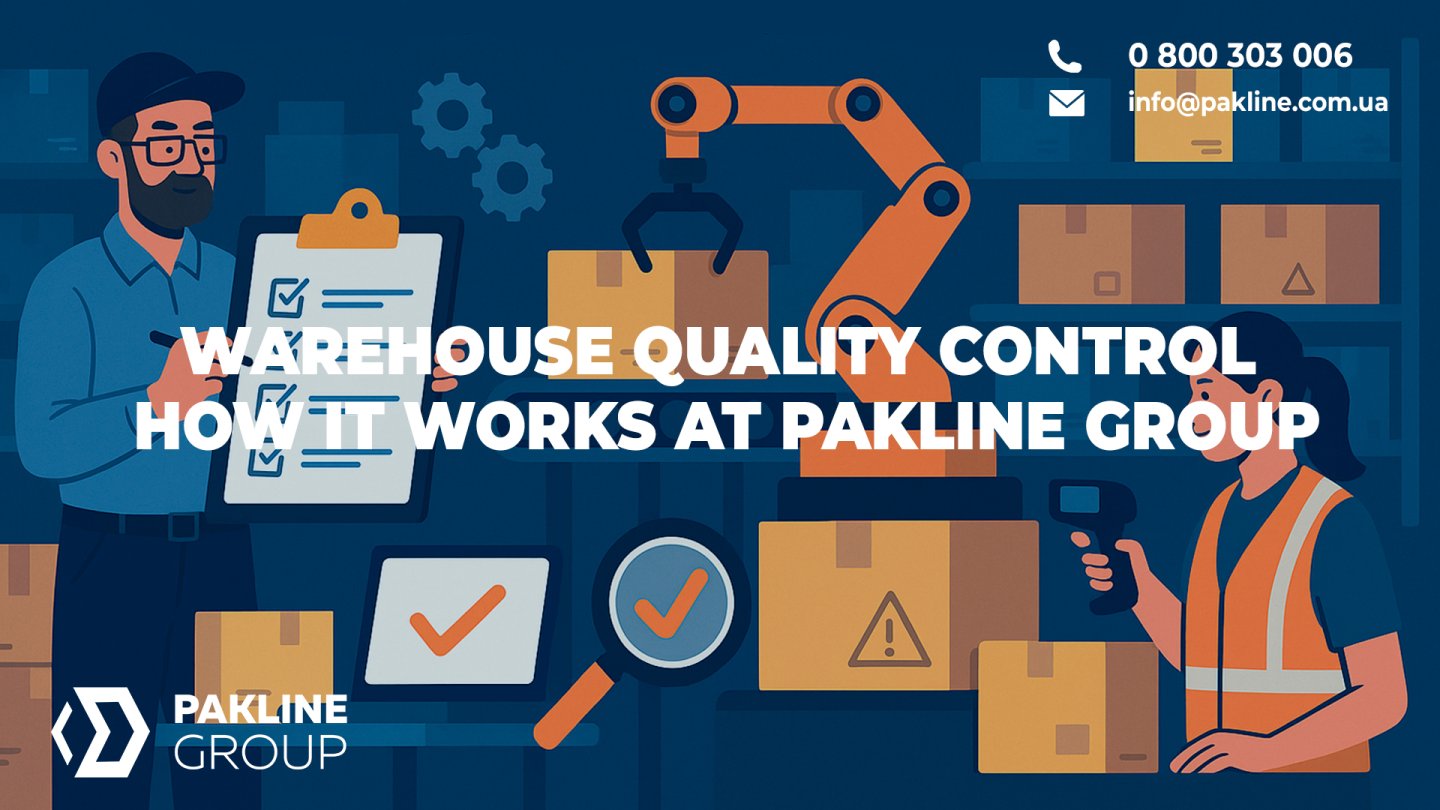
Warehouse quality control: stages, examples, tools
In this article, we’ll take a detailed look at how to properly organize warehouse quality control, what tools to use, common mistakes, and practical solutions proven in real projects.
What is warehouse quality control?
It’s a set of activities aimed at verifying that goods meet established standards, documentation, customer requirements, or specifications.
Quality control includes:
• Checking package integrity
• Visual inspection of goods
• Verifying SKU, quantity, and expiration dates
• Maintaining correct temperature and humidity
• Photo documentation at different stages
Main stages of quality control
- Upon receiving goods.
At this stage, it is important not only to check the quantity against the invoice but also to record the condition of the goods. At Pakline Group, we use mandatory photo documentation for every receipt and a working checklist system for each product type. - During storage:
Regular warehouse audits
• Periodic inspection of stock for damage
• Monitoring of storage conditions (humidity, temperature)
This allows issues or defects to be identified in time, before the picking stage. - During order picking.
The operator must check SKU, quantity, and order compliance. Scanners, mobile terminals, and a double-check verification system are used. - Before shipment.
At this stage, the “four eyes” principle is applied: one person picks, another verifies. Pakline Group has a dedicated quality control zone where an independent employee performs the final visual inspection, scans the goods, and confirms the shipment.
Quality control tools:
• WMS AXAPTA — automates all checks, integrates checklists, logs violations, and generates reports by SKU
• Photo documentation — all actions (receipt, damage, return) are recorded with photos stored in the system
• Checklists — each product category has a specific verification list
• 2D code scanners — reduce human error and confirm order accuracy
Tips for implementing a strong quality control system:
• Use photo documentation at every stage
• Develop and standardize checklists
• Train staff — quality starts with responsibility
• Use a WMS with defect, status, and return tracking
• Set up a separate zone and team for quality control
Pakline Group implementation examples:
At every warehouse:
• Incoming goods are subject to 100% photo documentation
• Control is carried out before every shipment
• All defective units are traceable via WMS
• Clients can access photos, reports, and verification acts via their personal account
Internal links: Learn more about our warehouses, WMS solutions, or fulfillment services.
Warehouse quality control is the foundation of reliable logistics. It affects not just return rates and claims but also customer trust. Implement proven solutions, automate control — and gain a competitive edge.
At Pakline Group, quality control is not just a word. It’s a system that works every day for quality’s sake.