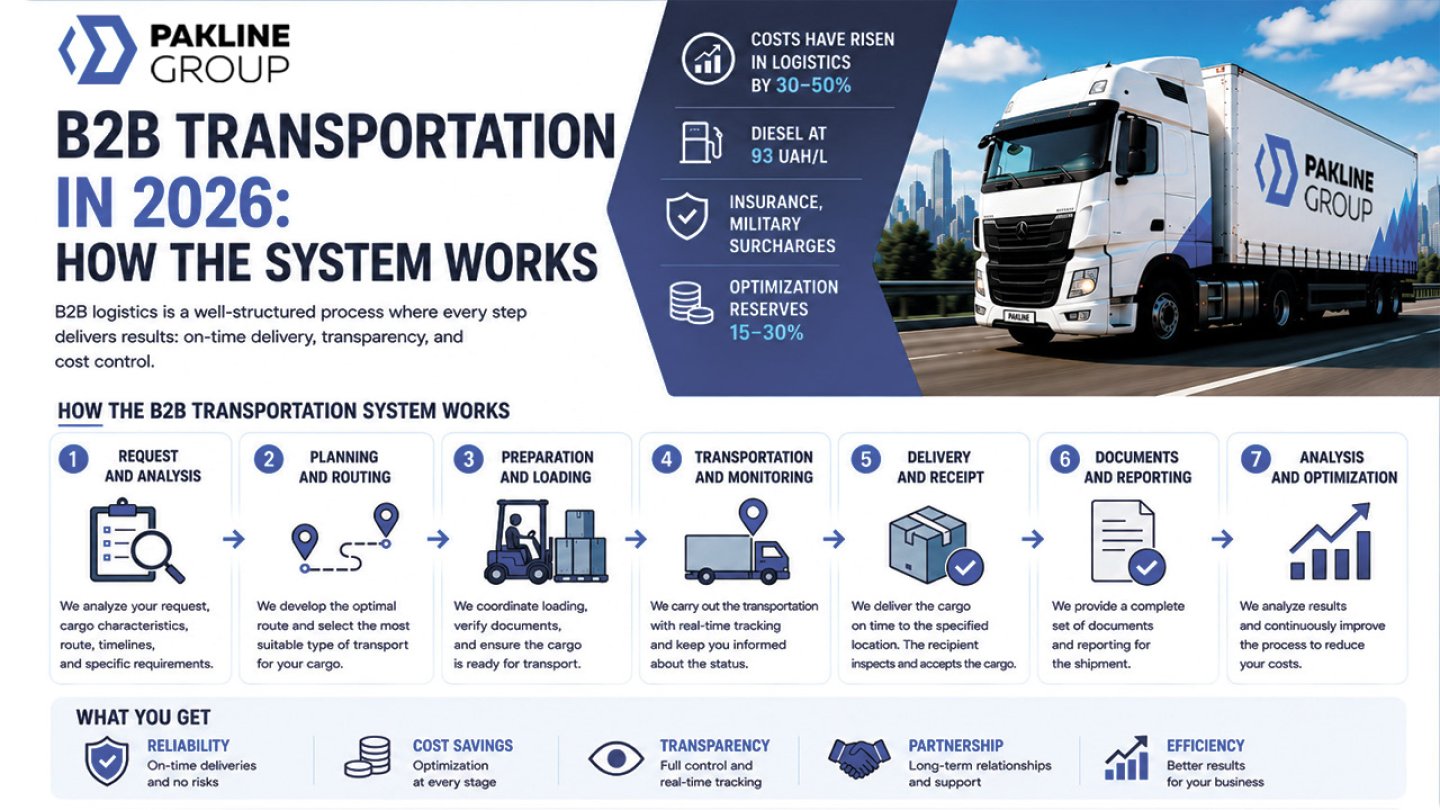
B2B Freight Transportation in 2026: How the System Works
Why B2B Logistics Is More Critical Than Ever
In 2026, unplanned spot shipments at base rates of UAH 75–95/km plus a 20–40% urgency surcharge are prohibitively expensive. B2B logistics with fixed rates and regular schedules has become a strategic necessity for businesses seeking cost predictability.
How a B2B Route Works in 2026
Orders submitted via EDI or client portal 24–48 hours in advance. TMS builds the optimal route accounting for current war-risk restrictions and road conditions. GPS monitoring provides real-time visibility. Pakline Group: 87 owned long-haul vehicles, 99% on-time rate, 27,000+ annual trips.
Fixed Rate as the Primary Advantage
The gap between market spot rates and contracted B2B rates is 10–25% in favor of regular clients. For a company making 20 Kyiv–Dnipro shipments monthly, this represents potential savings of UAH 150,000–300,000 per year at 2026 rates.
Maintaining SLA in 2026 Conditions
Achieving 98–99% on-time delivery in 2026 requires carriers with diversified owned fleets, alternative routing capabilities for war-risk corridors, and TMS-driven optimization. Only operators who invested in technology and own assets before 2022 can reliably deliver at this level.
Who Benefits Most From B2B Format
Manufacturers with regular inbound materials or outbound finished goods. Distributors restocking regional warehouses on weekly cycles. Retail chains with fixed replenishment schedules. An international tobacco corporation and a leading pharmaceutical distributor are among Pakline Group's B2B clients. Details: pakline-group.com.ua/en/transportation/b2b-dostavka.